
Being the PA Driver
As the PA Driver, you may be responsible for driving a production vehicle. This is a broad title because the vehicle can be almost any Class C vehicle, ranging from a passenger car to a five-ton cube truck. Any vehicle larger than a one-ton pickup truck, such as a Ford F-350, requires special care and attention. These trucks should be operated with the caution you would use when driving a much larger truck and trailer.
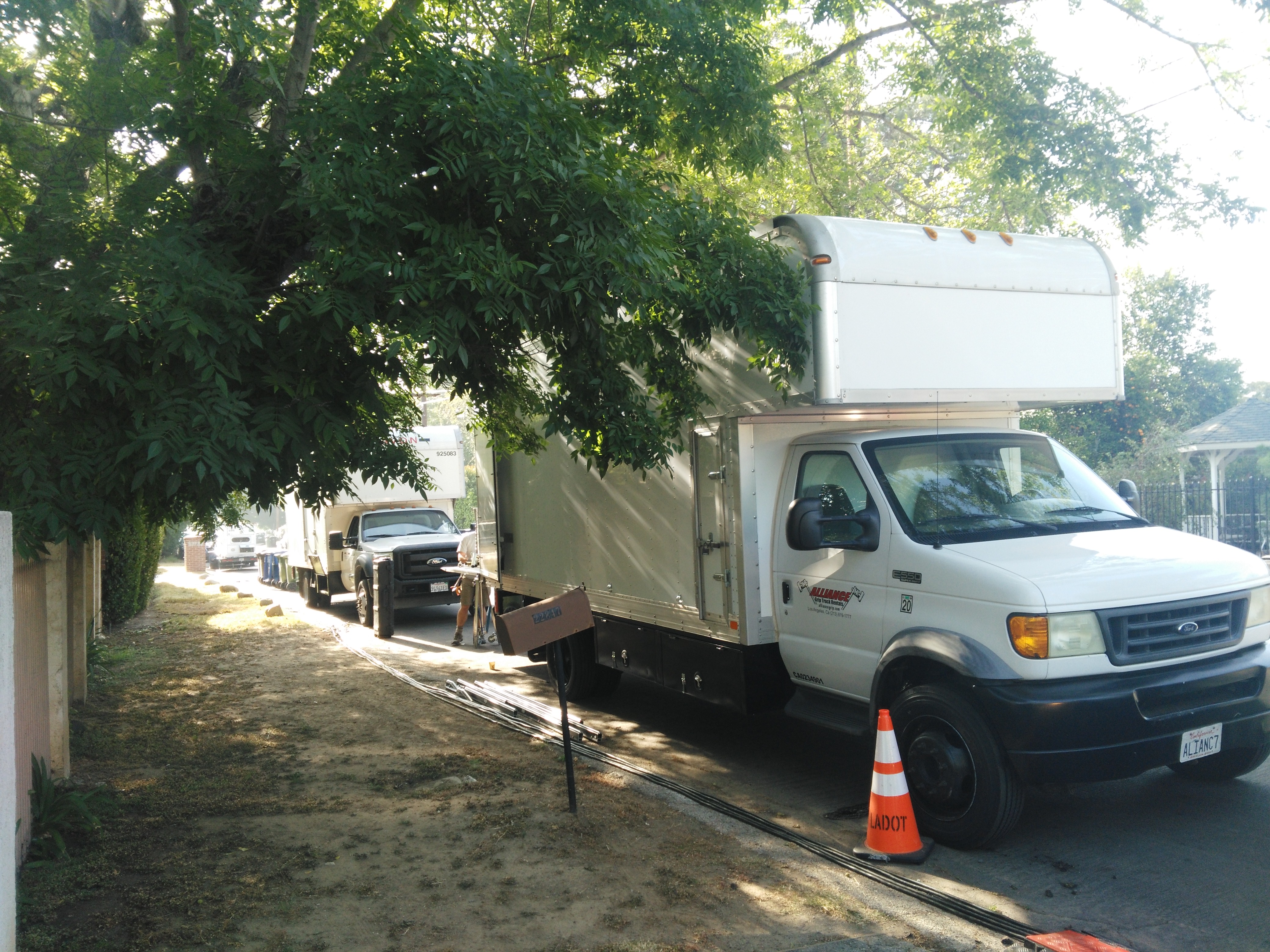
Before driving a large truck for the first time, read the current California Commercial Driver Handbook. It explains city driving, parking, hill operation, inspections, and many of the hazards a driver must understand. Reviewing the current handbook regularly is useful because rules, recommendations, and operating practices can change.
Production cube trucks commonly have a hydraulic lift gate at the rear. The gate may also serve as the rear closure for the cargo area. It is extremely heavy and must be operated with continuous attention.
Lift-Gate Safety
Always know where the gate is and where every person near it is standing.
A moment of inattention can cause a serious or fatal injury. A lift gate can weigh as much as 2,000 pounds. Never stand beneath it. If the hydraulic system fails, the gate can fall without warning. I have experienced a lift-gate failure firsthand. The sound and force of the gate falling only a few feet was like an explosion, and the movement of air knocked me off my feet.
Before Moving the Gate
- Inspect the entire path of travel and move any person, equipment, cable, stand, case, or other obstruction out of the way.
- Do not operate the gate until everyone nearby has acknowledged the warning.
- Stop immediately when anything does not look or sound right.
Required Verbal Warnings
Announce the gate movement loudly and clearly each time it is operated. People near the gate should repeat or acknowledge the warning before movement begins.
- When raising from ground level: “Gate coming up. Stand clear.”
- When lowering from truck-bed level: “Gate going down. Gate away. Stand clear.”
- Near the upper or lower stopping point: “Watch your toes and hands.”
- At the upper position: “Gate is up.”
- At ground level: “Gate is down.”
Do not move the gate when a nearby person has not acknowledged you. Repeat the warning until that person responds or moves away.
Operating the Gate
- Watch the gate and its complete travel area during the entire operation.
- Never place an object in the gate’s path. The hydraulic system is powerful enough to crush equipment and structural materials.
- Open the gate by rotating it downward.
- To close it, raise it completely to truck-bed height and then rotate it upward until it aligns with the rear frame.
- Make sure straps, blankets, cables, cases, and other material are clear of the door seals before closing the gate.
- Use smooth control inputs so equipment and people riding on the platform are not jolted.
Moving Between Ground and Bed Level
When lowering the gate:
- Stop the gate just before it reaches the ground.
- Rotate the platform downward until its outer edge rests as evenly as possible on the ground.
- Do not force the gate. Use small control inputs and stop when it no longer settles normally.
When raising the gate:
- Rotate the platform into a level position.
- Raise it vertically until it stops at truck-bed height.
Keep the truck running, or use the approved external power connection, while operating the lift gate. The hydraulic pump is driven by an electric motor and can drain the vehicle batteries.
Lift-Gate Controls
- The up control is normally closest to the remote cable and is the upper button on exterior controls.
- The center control is normally the rotate control. Hold it while pressing up or down to rotate the platform.
- The down control is normally farthest from the remote cable and is the lower button on exterior controls.
Confirm the control layout before operating an unfamiliar truck. Vehicles and lift-gate systems can differ.
When a lift gate must remain open, leave it at ground level and place traffic cones at its outer corners.
The Truck
Rental Checkout
When receiving a truck from a rental vendor, complete a thorough vehicle inspection before accepting responsibility for it.
- Record all existing damage and mechanical concerns on the rental checkout form.
- Photograph all sides of the vehicle, the cab, the cargo area, the roofline when visible, the lift gate, and any existing damage.
- Ask the rental representative about special operating procedures, including the transmission, locks, alarms, lift gate, fuel type, and starting sequence.
- Sign the checkout form only after you believe the vehicle is safe, complete, and ready to operate.
Before Driving Away
Whenever the truck has been parked—and again before leaving—walk around the entire vehicle. Look for unsecured doors, raised stabilizers, disconnected cables, objects beneath the truck, low clearances, missing equipment, new damage, and anything else that could interfere with safe movement.
Returning the Truck
- Refill the vehicle with the exact fuel type specified by the rental company and marked on the vehicle.
- Do not rely only on the color of the fuel cap or pump handle. Read the vehicle label and the rental paperwork before fueling.
- Using the wrong fuel can severely damage the engine and fuel system.
- Obtain all return paperwork and make sure the keys are delivered to the designated person or secured in the approved drop box.